Royali-Tea Duck Teacup Kawaii Sticker Review
As a designer who spends more time staring at stitch charts and fabric swatches than actually sleeping, I have developed a fairly strict filter for new embroidery files. The market is flooded with generic clipart that looks fine on a screen but falls apart under the needle. When I first pulled up Royali-Tea Duck Teacup Kawaii Sticker, my initial reaction was less about the cute factor and more about structural viability. Could this design survive the transition from digital graphic to physical textile without losing its soul? After running several test stitches and visualizing it across different product lines, here is my honest breakdown of how this file performs in real-world commercial and personal projects.
First Impressions: Mood and Visual Personality
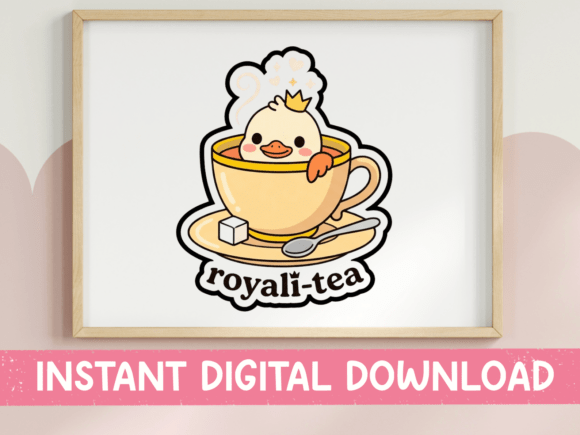
The concept behind Royali-Tea Duck Teacup Kawaii Sticker is immediate and charming. It targets two distinct but overlapping audiences: tea enthusiasts and lovers of kawaii culture. Visually, the design features a fluffy yellow duckling wearing a tiny gold crown, nestled inside a steaming cream-colored teacup. From a design perspective, this creates a strong focal point. The roundness of the teacup and the soft curves of the duckling suggest a design that relies heavily on smooth transitions rather than sharp, aggressive angles.
The "royal" theme introduced by the crown adds a layer of whimsy that elevates it above standard animal motifs. It feels like a design meant to evoke comfort, nostalgia, and a touch of playful luxury. For a crafter or small business owner, this emotional resonance is critical. Customers do not just buy embroidered items; they buy the feeling those items provide. This design promises a sense of cozy indulgence, making it highly suitable for morning routines, relaxation gifts, or nursery decor.
Real-World Application: Where Does It Fit?
In my experience, the success of an embroidery project often depends on matching the design scale and theme to the correct substrate. Royali-Tea Duck Teacup Kawaii Sticker shines brightest when applied to products that align with its domestic and comforting aesthetic. I see this design performing exceptionally well on custom apparel such as oversized sweatshirts or high-quality cotton t-shirts. The kawaii element works particularly well on baby clothes, where soft pastels and gentle themes are preferred. However, the fit must be considered; a large, detailed teacup might overwhelm a infant onesie unless scaled down appropriately.
For craft business owners and Etsy sellers, this design is a versatile asset for home goods. Imagine this stitched onto a linen apron for a baker, or perhaps centered on a kitchen towel hanging in a boutique display. The steam rising from the cup offers natural negative space that can be used effectively with satin stitch or fill stitch to create texture. It also translates beautifully to tote bag designs, where the central placement allows the full detail of the duck and crown to be appreciated. Holiday embroidery is another strong contender; this design could easily serve as a festive gift for a teacher, a coworker, or a loved one who appreciates a good pun with their morning brew.
Bridging the Gap Between Graphics and Embroidery
While categorized under T-Shirt Designs and Graphics, it is important to recognize that this is ultimately an embroidery file intended for physical production. The transition from a flat image to a textured machine embroidery design requires careful consideration of stitch types. The fluffy appearance of the duckling likely utilizes dense fill stitches to simulate fur, while the crown may rely on satin stitching for its metallic sheen and defined edges. Understanding these technical elements helps predict how the final product will feel and look over time.
Technical Challenges and Areas of Caution
No design is perfect, and Royali-Tea Duck Teacup Kawaii Sticker presents specific challenges that designers must address before committing to bulk production. One of the primary concerns is hoop size and density. If the design includes intricate details within the teacup rim or the duck’s facial features, these small areas may suffer if the hoop size is too small. Tiny details can merge together, resulting in a muddy appearance that loses the clarity of the original graphic. Always test the design in your intended hoop size to ensure that individual stitches remain distinct.
Fabric selection is equally critical. Textured fabrics, such as heavy canvas or boucle wool, can distort the smooth lines of the teacup and obscure the fine details of the crown. Similarly, stretchy fabrics require proper stabilizer support to prevent puckering. Without adequate backing, the tension from the fill stitches may cause the fabric to pucker around the dense areas, ruining the professional finish. Dark fabrics also pose a challenge; if the design relies on light thread colors for the cream teacup and yellow duck, contrast issues may arise. In such cases, a cut-away stabilizer or additional interfacing may be necessary to maintain structure and brightness.
Detail Integrity and Longevity
Another practical consideration is the durability of the finished product. Products that undergo frequent washing, such as aprons, tea towels, and baby clothes, need designs that can withstand abrasion. Dense stitch areas, particularly in the crown and the duck’s body, are prone to thread breakage or fraying if not stabilized correctly. Designers should inspect small details closely during testing to ensure that no part of the design is overly sparse or excessively dense. A balanced stitch density ensures that the embroidery project remains flexible and comfortable against the skin, which is especially important for wearable items.
Strategic Advice for Designers and Sellers
For those looking to incorporate Royali-Tea Duck Teacup Kawaii Sticker into their inventory, I recommend a methodical approach to testing. Start by embroidering on scrap fabric that matches the weight and texture of your final product. Check thread color contrast thoroughly; what looks vibrant on a monitor may appear dull in person. Inspect the design in black and white mockups to evaluate tonal separation and ensure that the shapes remain distinguishable regardless of color variations.
Furthermore, consider the versatility of the design. Can it be adapted for an applique design using fabric scraps? Can it be simplified for a smaller embroidered patch? Thinking creatively about how the core elements—the duck, the cup, and the crown—can be reimagined can expand the commercial potential of the file. Always confirm licensing terms before selling finished items or digital products. While the design may be available for personal use, commercial rights vary, and understanding these restrictions protects your brand and customer trust.
Final Verdict on Commercial Viability
Royali-Tea Duck Teacup Kawaii Sticker is a strong candidate for designers seeking to add a touch of whimsy and warmth to their collections. Its appeal lies in its universal themes of comfort and playfulness, making it a safe yet engaging choice for a wide range of customers. By paying close attention to stitch density, fabric compatibility, and proper stabilization, you can transform this digital graphic into a high-quality handmade product that resonates with buyers. Whether you are creating personalized gifts, boutique branding materials, or custom apparel, this design offers a solid foundation for creative expression. Just remember to test rigorously, respect the limitations of the medium, and always prioritize the tactile experience of the end user.